Grounds and Primers: How Surface Preparation Shapes Colour
Surface preparation as a controlling parameter
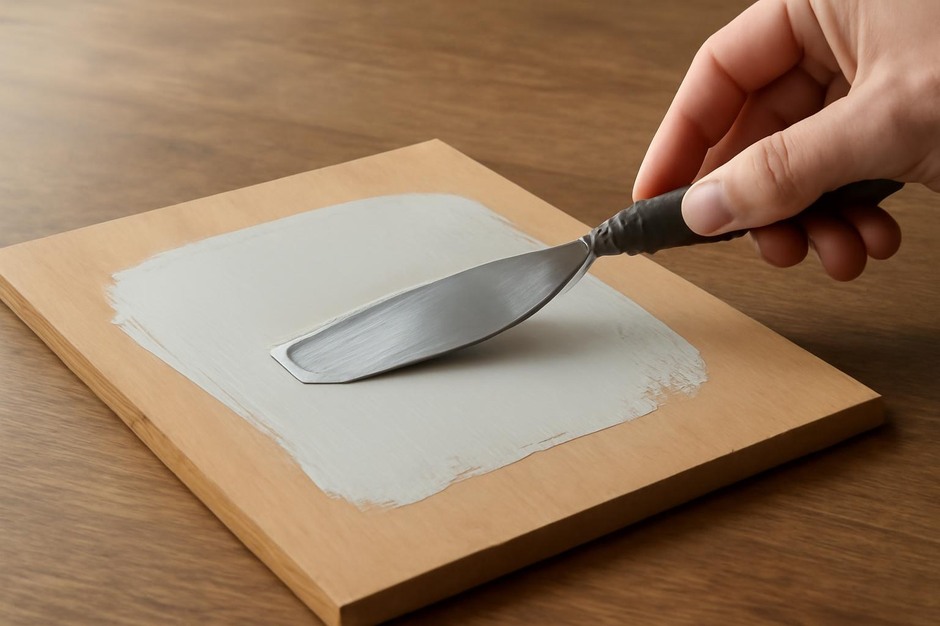
Preparing a support with a ground or primer alters how paint sits and how colour is perceived. A primer changes the surface reflectance, absorbency, and texture, thereby influencing saturation, working time, and the apparent depth of colour. Conscious ground choice is a material decision that should align with both technical and compositional intentions.
Types of grounds and their effects
- Acrylic gesso: Widely used for priming canvas and board. It increases tooth and opacity, usually producing a slightly matte surface. Colours may read cooler or slightly flattened compared to unprimed supports due to increased scattering.
- Oil grounds: Traditional oil-based primers offer a smoother, more luminous base for oil painting. They tend to deepen colour because the refractive index of the ground complements oil-bound pigments.
- Absorbent grounds: Papers or boards treated to absorb faster reduce working time and promote matte surfaces, which can be desirable for drawing or rapid layering.
- Tonal grounds: Introducing a mid-value or coloured ground changes the initial value relationships and can unify subsequent layers. Tonal grounds can reduce the number of passages needed to achieve depth.
Simple comparative tests
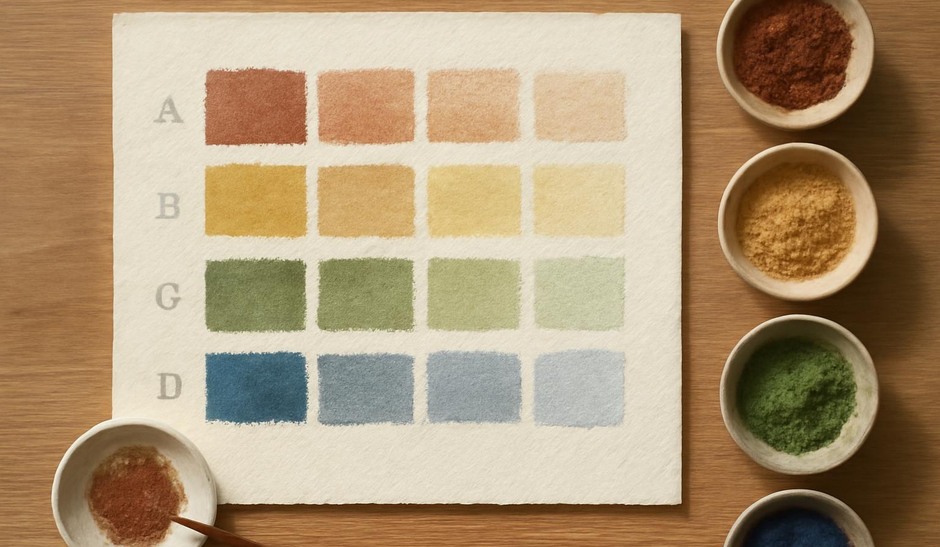
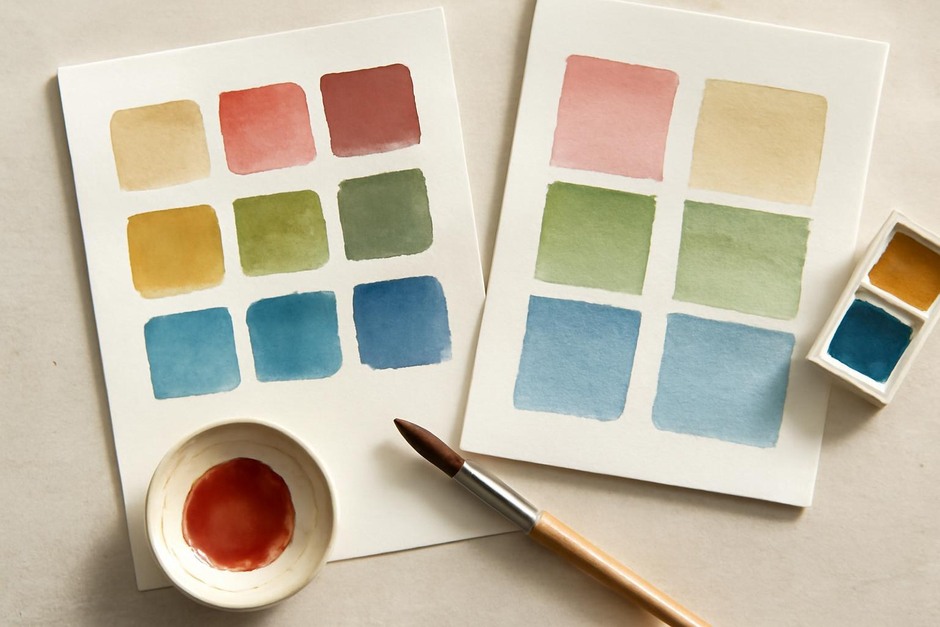
To evaluate a ground, prepare small panels or paper strips with different primers applied in consistent thickness. Allow each to cure fully, then run a standard series of tests using the same pigments and brushwork.
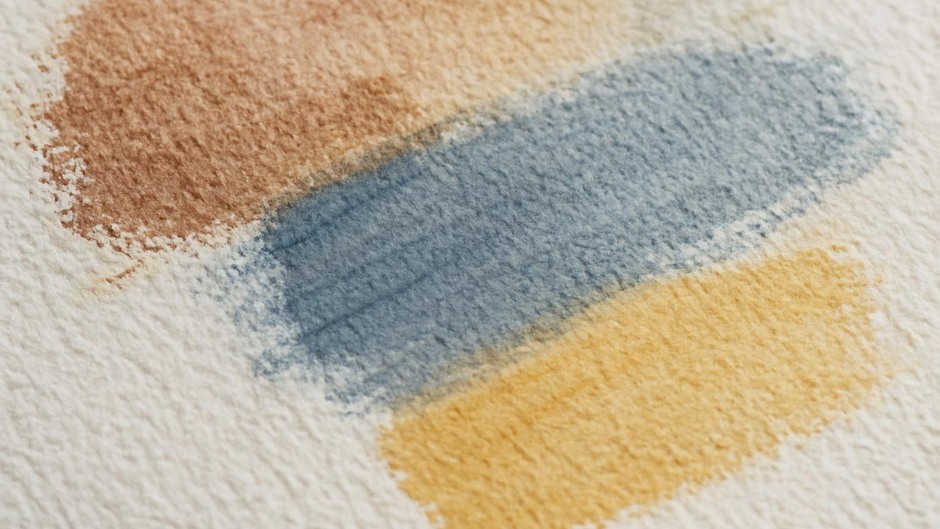
- Colour reflectance: Apply a saturated stripe of pigment and observe how the colour reads over each ground. Note shifts in warmth, coolness, and perceived chroma.
- Edge behaviour: Make a wash and a dry brush stroke. Grounds with more tooth will abrade edges and produce broken marks, while smooth primers will yield clean edges.
- Layer adhesion: Once dry, try gentle lifting and scumbling to see how subsequent layers interact. Some grounds promote better mechanical adhesion; others can resist reworking.
Choosing a ground for intent
If the intention is luminous glaze work, a less absorbent, smoother ground that reflects light through transparent layers is advantageous. For textured, expressive surfaces where the physicality of the paint is important, toothy gesso or an absorbent ground can enhance tactile incident and brushwork. Tonal grounds are especially useful when a consistent mood is desired across a series of paintings and can simplify value decisions early in the process.
Practical tips
Always allow primers to cure according to manufacturer recommendations or traditional recipes. Thin, even coats produce predictable results. When experimenting, label samples with the ground type, number of coats, and drying time. Keep these samples visible in the studio for reference; over time they become a useful guide for choosing the right preparation for a given project.
Surface preparation is not a technical afterthought. It is a deliberate choice that shapes the behaviour of colour, the feel of the mark, and the long-term character of a work. Small, repeatable tests reduce guesswork and help align materials with compositional goals.