Natural Pigments and Lightfastness: Testing and Observing Fading
Context for natural pigments
Natural pigments have a long history in art practice. They vary in composition and behaviour: some are mineral-based and stable, others are organic and more fugitive. Understanding these differences is essential for work intended to retain its original chroma over time. The laboratory offers precise testing, but simple, repeatable studio experiments provide meaningful, immediate information for day-to-day decisions.
Setting up pragmatic lightfastness tests
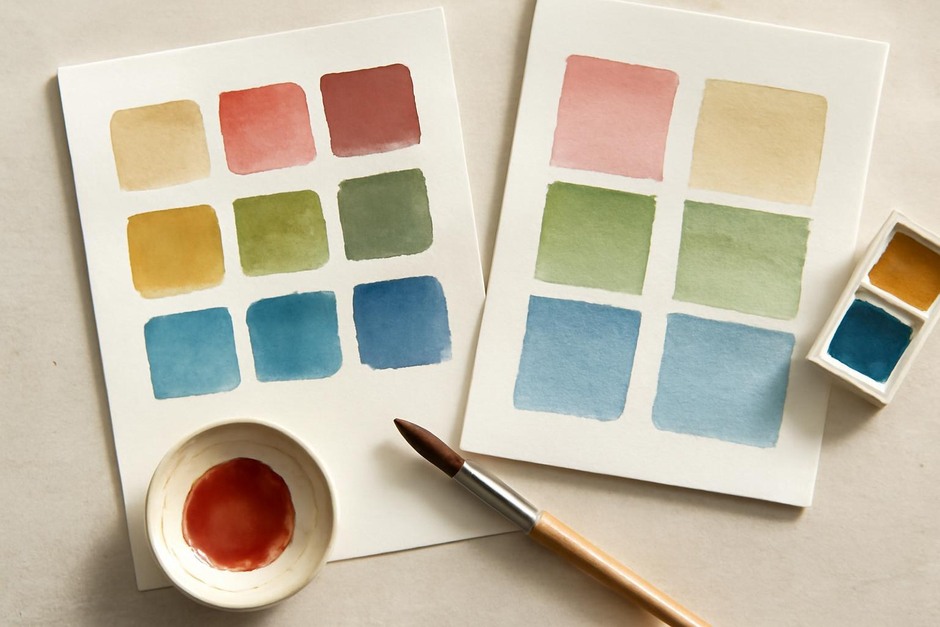
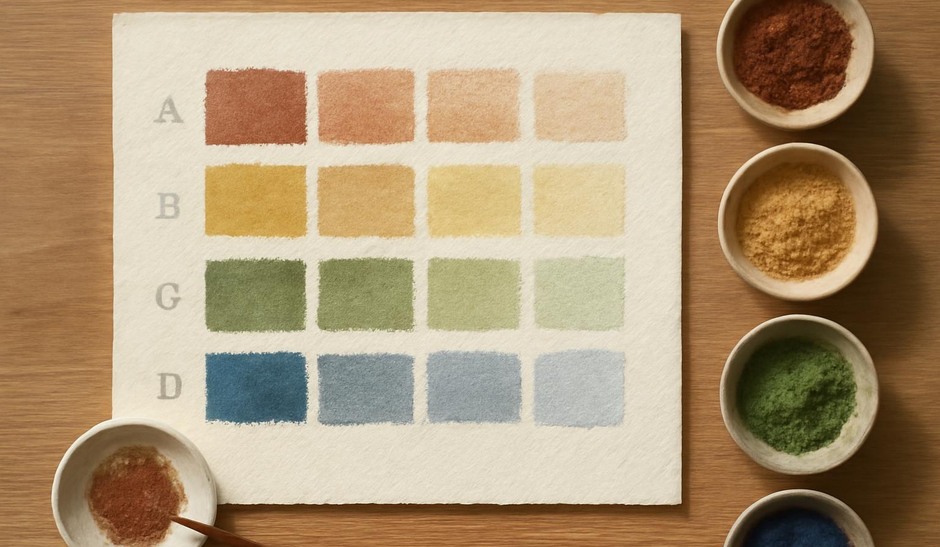
Design tests that are consistent and reproducible. Use small, labelled patches on a uniform support—preferably a bright, well-sized paper or a primed board. Prepare at least two identical sets: one to be exposed to a controlled light source and one to remain in the dark as a reference. Natural sunlight is a common choice but varies with season and location; a consistent artificial light setup can produce more comparable results.
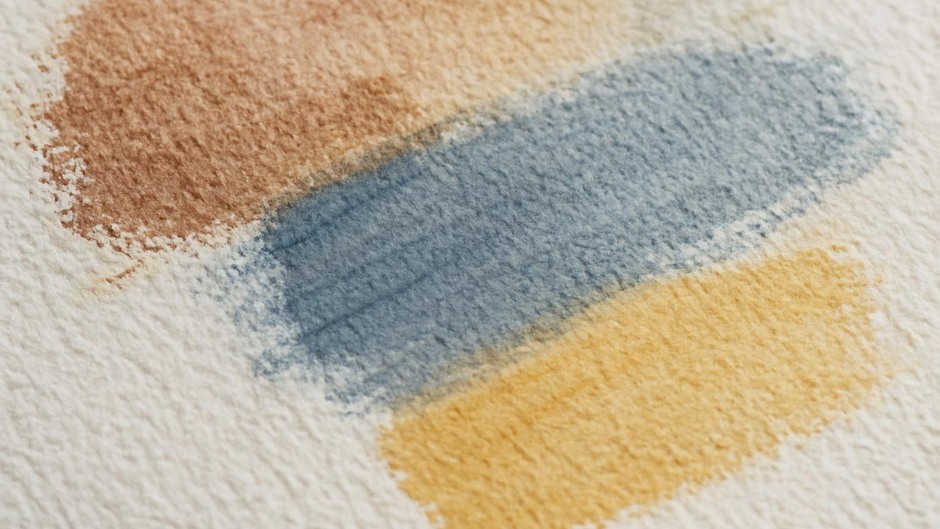
- Apply swatches: Paint each pigment at consistent saturation and thickness. Include pure pigment swatches and simple mixtures that are commonly used in your practice.
- Record conditions: Note the date, time of day, duration, and whether the exposure is direct sunlight or diffused light. Keep a written log with photographic documentation under consistent illumination.
- Compare over time: Revisit the samples weekly and monthly. Small changes become visible over weeks; larger shifts may appear over months. Compare exposed swatches to the unexposed reference for clear assessments.
Interpreting results
Some fade steadily in hue and saturation; others shift in tone or develop a warm cast as unstable molecules degrade. Record both quantitative impressions—amount of loss—and qualitative notes on how the colour altered, such as becoming paler, browner, or shifting toward a neighbouring hue. These nuanced observations often guide material choices more usefully than a simple pass/fail judgement.
Practical implications for studio work
If a natural pigment shows early instability, use it sparingly as an accent or reserve it for studies unlikely to be exposed to strong light. Consider protective framing choices and the expected viewing conditions. For works intended for frequent daylight exposure, prefer pigments that showed stability in your tests.
Alternatives and combinations
Mixing a fugitive natural pigment with a stable, lightfast pigment can modulate its visual effect while reducing overall vulnerability. However, mixing should be tested because chemical interactions can accelerate changes. Use small trial patches to evaluate mixtures rather than assuming stability based on the stable component alone.
Value of repeated observation
These tests are not definitive warranties but disciplined observations that build a personal archive of material behaviour. Over time, patterns emerge: which suppliers consistently provide stable specimens, how particular binders interact with pigments, and which conditions accelerate change. This archive helps make calm, evidence-based decisions in material selection and conservation-minded display.
Natural pigments offer unique textures and tones. When paired with careful, repeatable lightfastness tests, they can be incorporated thoughtfully into practice without surprise. Close observation and a modest, methodical testing habit provide clarity about how these materials will behave over time.